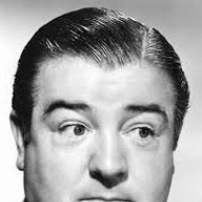
Ossie Davis:
"The Harlem Renaissance" is one of those fancy terms that white folks use when they want to look at a certain aspect of black folks. I don't think any of us went around say, "Well, we gonna have us a renaissance," or anything like that. It was just a holiday of the spirit
复制复制成功复制失败,请手动复制
3b复制复制成功复制失败,请手动复制
[about the glory of Harlem in the 20s] 复制复制成功复制失败,请手动复制
f35复制复制成功复制失败,请手动复制
Ossie Davis:
If I had to choose between Heaven and Harlem, oh ho ho! Harlem would win every time
[about the Scopes Monkey Trial]
Host/Narrator:
What Scopes represented and what the world came to witness was a colossal clash of ideals. The cool reasoning of science seem to threaten the deep and dividing roots of religion. It was one thing to replace the family mule with the Model T but quite another to trade Matthew, Mark and John for Einstein, Freud and Darwin. For many people these were confusing times. And what may have been most unsettling about the pace of change in the 1920s was that people wanted both the benefits of the future and the familiar comforts of the past."
Lillian Hall Gerdau:
My father was asked if he would like to join the Ku Klux Klan. He grabbed the guy by the collar and threw him down the stairs. Three nights later, almost directly across the street there was a large cross burning. My mother said 'It's almost as though they're guarding the gates of Hell'
[about the stock market crash of 1929]
Host/Narrator:
30 million dollars in paper value suddenly vanished that day as the stock market crashed. The 20's bubble had burst and with it the country's optimism.
[about Lindbergh's landing]
Ellie Sullivan:
When Lindbergh came back, it was as though he walked on water. The public couldn't get enough of him. He was a star and there wasn't a woman in America who wasn't crazy about him
[about the Wall Street crash of 1929]
Clara Hancox:
Overnight it was like bombs fell. People jumped off the George Washington bridge which had not long ago been built, people we knew! My father was wiped out, he never recovered, psychologically he never recovered.
[about FDR]
Ossie Davis:
"He could, through the magic of his voice, involve you in the great adventure of making America work again
Host/Narrator:
The flags of 60 nations flew over the 1939 World's Fair, only one major power was absent. Germany had been invited but Hitler had declined. He had his own plan for the world of tomorrow.
Host/Narrator:
In the second world war this century 50 million people would die, nearly half of them civilians. They would die not because they lived near enemy targets but because they were the targets.
Hannah Greensueit:
People being desperate will run after a man like Hitler
Host/Narrator:
On the first Sunday December 1941, Americans were doing what Americans did on any normal Sunday. Soon every American would know that over 2000 of their countrymen had perised in the Japanese attack on Hawaii's Pearl Harbor and that nearly half of the fleet had been destroyed
[about Sinatra during WWII]
Host/Narrator:
One young man who was not overseas, kept out of the service by a broken eardrum would begin a career about now that would remain a social phenomenon for half a century. The men of the time were less enamored of Sinatra, the military publication Stars and Stripes noted 'Mice make women scream too'.
Doris Kearns Goodwin:
[About FDR's death] 复制复制成功复制失败,请手动复制
1a1复制复制成功复制失败,请手动复制
: "You could see the impact that his life had made on the American people when that famous trainride took place from Warm Springs Georgia to Washington D.C. Hundreds of thousands of people had come out just to see his body go by on the train simply as a tribute to the fact that this man had been their leader through the two greatest crises of their lives, first the depression and then the war itself"
复制复制成功复制失败,请手动复制
fee复制复制成功复制失败,请手动复制
[about the Hollywood blacklist]
Lee Grant:
It was scary. I was 19 and I took the fifth. Being and informer and placing your fellow actor, fellow director, fellow friend in jeopardy meant that that family didn't work anymore. So taking that step was about the worst thing you could do
[about segregation]
Bernice Reagon:
If you went to the Dairy Queen, white people could go in and sit down but black people had to go to the window. That did not change until the civil rights movement
[after WWI]
Host/Narrator:
In the wake of the First World War, Europe lay in ruins. Even the victors France and Britain grappled with ruin and rage. In all, 9 million men had died. Everyone knew someone who had died, a father, a brother, a cousin, a friend. For years, the wounded and the maimed haunted the streets of every city in Europe, grim reminders of The Great War.
Robert McNamara:
Make no mistake about it, if you make a mistake with regards to nuclear weapons you will destroy nations.
[after Vietnam]
Host/Narrator:
The country had to now face the fact that there were some burdens too great to bear, some prices too steep to pay.
Host/Narrator:
In 1997, the people of Britain gathered for a final farewell to Princess Diana. 96 years earlier in 1901 the same streets were crowded for the funeral of Queen Victoria who had given her name to an entire era. The world changed more between those two funerals than it had in 1000 years of history.复制复制成功复制失败,请手动复制